
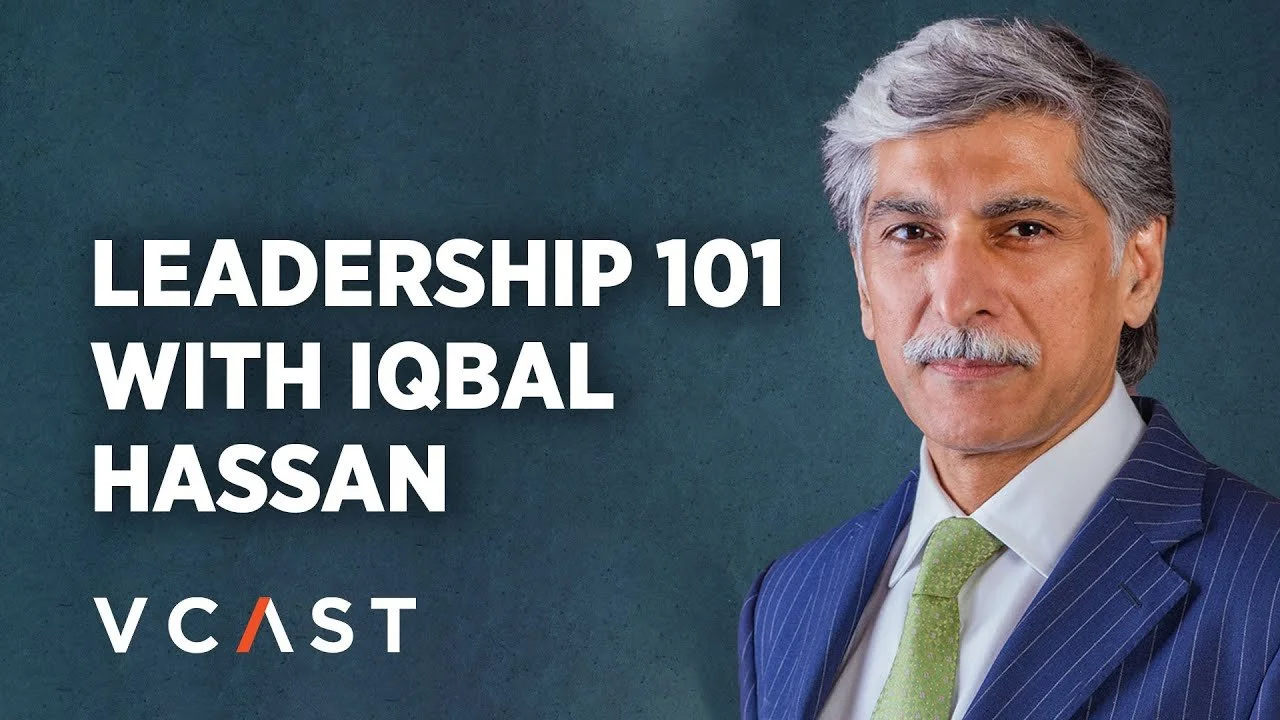
Khawaja Iqbal Hassan on the Essence of Effective Leadership
"For people to believe in your vision, they have to believe in you. If you don’t represent the values that are important to people, it becomes very difficult to be an effective leader. You can be a leader, but you will probably end up in the wrong place.” — Khawaja Iqbal Hassan, speaking on the essence of effective leadership and the qualities that distinguish truly impactful leaders.
Hassan is one of Pakistan’s most senior corporate leaders. He has served on the boards of ICI Pakistan, Engro Corp, HBL, and the State Bank of Pakistan. He is a recipient of the Sitara-e-Imtiaz and is widely recognized for providing direction and oversight to institutions across the public and private sectors.
Hassan’s extensive experience has shaped his belief that effective leadership goes beyond titles and authority. Central to it are two often overlooked elements: hope and help. Without these, even the most capable leaders struggle to inspire and guide their teams.
Leadership, he explains, is not merely about management. “The managers build the ship; the leader gives you a passion for the sea and says, ‘Let’s go conquer another world,’” he notes. Decisiveness, he emphasizes, is the clearest test of leadership. While collaboration matters, leaders must guide discussions toward concrete decisions—otherwise, conversations risk stagnation.
Reflecting on the evolution of leadership, Hassan contrasts the post-industrial command-and-control model with today’s expectations. Previously, leaders primarily planned, directed, and controlled. Modern leadership has evolved: planners are now architects, envisioning the future and positioning their organizations to thrive, while controllers have become coaches, guiding teams to perform at their best.
Hassan identifies several core qualities essential for leadership. Courage is paramount—leaders must be willing to take risks and endure the challenges that come with bold decisions. Resilience allows them to persist when outcomes falter, continuing to drive toward a mission that they and their teams believe in. Excellence is another hallmark; great leaders maintain a relentless commitment to improving their organization’s products, services, and overall performance.
Equally important are communication and intuition. Leaders must understand how people think, what motivates them, and how to inspire peak performance. Strong communication ensures that vision and purpose resonate throughout the organization, while intuition allows leaders to anticipate challenges and align their teams effectively.
Leadership sets the tone for the entire organization. A leader’s energy and mood ripple across the workforce: negativity spreads frustration and slows progress, while vision, enthusiasm, and clear communication elevate morale and engagement.
For leaders of tomorrow, Hassan stresses authenticity. Owning mistakes, learning from them, and moving forward builds trust. Leaders do not need to be infallible; they must be human, approachable, and capable of correction, modeling the resilience and integrity they expect from their teams.
“Leaders are heat seekers, they are not heat deflators. They have courage, conviction, and stand their ground, facing the tough decisions of life. They actually enjoy the heat that comes to them in the leadership position.”
As you shape your own leadership style, which qualities do you want to embody to inspire and guide others? Let us know in the comments!
This article was developed with the assistance of AI tools.

TMC’s global SAP recognition marks a milestone for Pakistan’s technology sector. Abdul Haseeb and his leadership team discuss the company’s SAP roots, AI ambitions, international expansion, and the people behind its growth.