
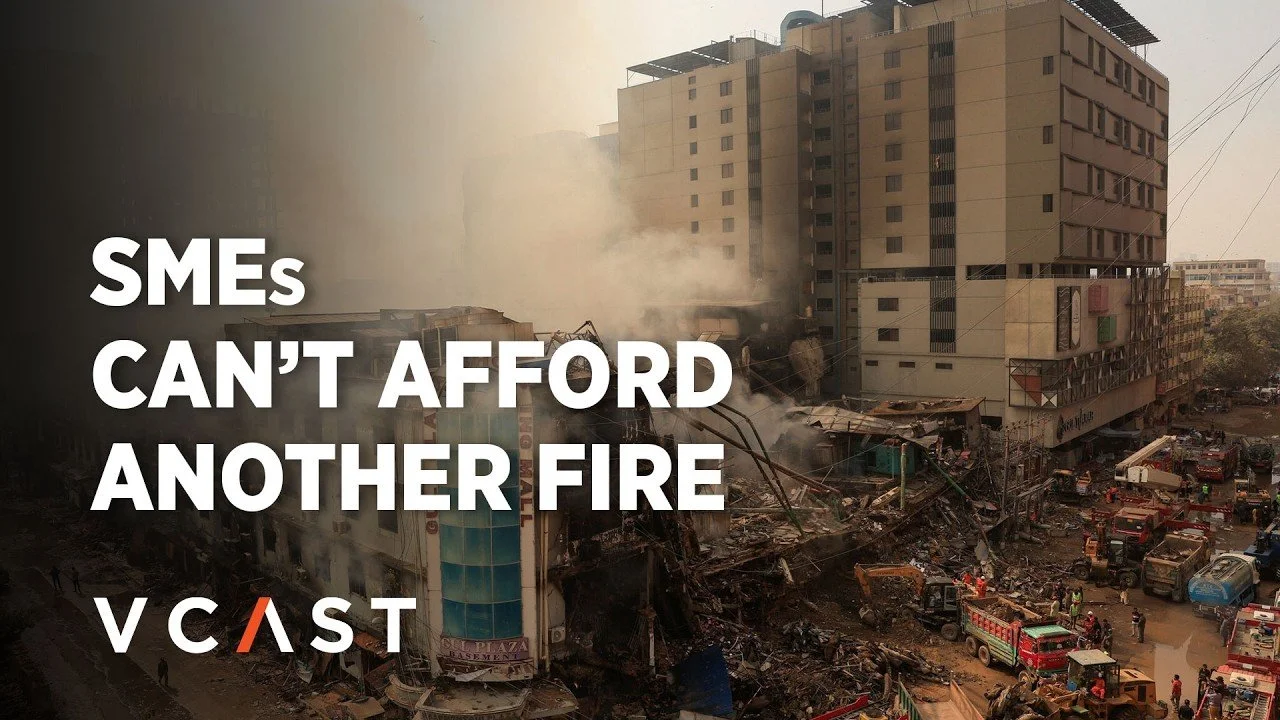
“We reached a stage where we can simply not afford to say sorry; nothing can be done—we need to act differently. Trust will only be created when the insurance industry not only pays but pays quickly," says Azfar Arshad, MD and CEO of Jubilee General Insurance, discussing the aftermath of the recent Gul Plaza fire in Karachi.
The tragedy, which claimed the lives of 78 people, has reopened a familiar conversation about safety and preparedness in Pakistan's commercial spaces. Rescue operations at the site have concluded, yet the incident echoes a pattern of recurring fires that have devastated urban centers, including Millennium Mall, Tariq Road, and Saddar markets in Karachi, incidents in Lahore, and Islamabad's Centaurus Tower.
For Arshad, the impact of such disasters extends beyond the immediate loss of life. He emphasizes the vulnerability of the SME sector, which he describes as "the backbone of any country's economy." Most small and medium-sized enterprises operate in a semi-formal manner, lacking comprehensive documentation for assets, stock, and operations. As a result, the sector has limited access to insurance safety nets, leaving businesses exposed when disasters strike.
He notes that unfortunate incidents like the Gul Plaza fire tend to repeat themselves, yet the SME sector remains without a safety net due to semi-formal operations. Financial literacy challenges, trust deficits, and complexity in insurance products further hinder adoption. While Islamic financial instruments such as takaful exist, SMEs often find the terms difficult to navigate, discouraging engagement.
Addressing these challenges, Arshad stresses that the insurance industry cannot wait for the full formalization of the economy. Proactive measures are required to simplify claims processes, shorten turnaround times, and communicate clearly with policyholders. The goal is to demonstrate that insurance is not only available but reliably accessible in times of need.
In 2024, Pakistan's insurance industry collected 650 billion rupees in premiums and contributions and disbursed 599 billion rupees in claims and benefits. He envisions an insurance sector that works closely with SMEs, developing tailored solutions even before the economy achieves full documentation. By doing so, insurers can bridge the gap between formal financial mechanisms and the semi-formal operations of the SME sector. Key to this transformation is trust. Transparent procedures, swift processing, and clear communication are essential to encourage SME participation.
To achieve this, insurers should focus on raising awareness, simplifying procedures, and providing solutions specifically tailored for SMEs.
“Trust will only be built when the industry informs the people that it actually paid 599 billion rupees in claims during the year; we must focus on communicating this and reducing turnaround times and complexities to prove that promises will materialize.”
As Pakistan continues to grapple with recurring commercial fires and the broader vulnerability of its SME sector, Arshad's message is clear: rebuilding trust requires action, not apologies. A reliable, accessible, and transparent insurance system is essential to protect the businesses that form the foundation of the country's economy.
How can citizens, businesses, and insurers work together to prevent tragedies and support affected communities? Let us know in the comments!
This article was developed with the assistance of AI tools.
Javed Ahmed on how Jubilee Life pioneered cashless microinsurance in Pakistan, making healthcare more accessible to lower-income families while technology continues to reshape the insurance industry.